


The old adage “you are what you eat” is not just a saying; it has been long validated by science. Food and mood are closely linked, and it is becoming clearer that the connection between the two is complex and multifaceted. Let’s discuss how the type of food affects the brain and how it varies depending on various factors like age and gender. Let’s find out which foods make you feel good or bad.
The Food and Mood Connection
There is a considerable amount of information to back up the notion that our food is very important for maintaining good mental health. According to a study in the American Journal of Public Health, people who eat a diet heavy in processed foods, bad fats, and sugar are more likely to experience melancholy, anxiety, and other mental health conditions. Those who eat a diet rich in fruits, vegetables, whole grains, and lean protein, on the other hand, have a lower risk of mental health illnesses. The exact mechanism behind this relationship between mental health and diet is not yet fully understood, but scientists believe that the answers lie in the gut-brain axis.
The Gut-Brain Axis
The vagus nerve, which is the largest nerve in the body, connects the gut microbiota to the central nervous system. It controls the “rest and digest” response, our body’s natural response to relax and recover by slowing down the heart rate, increasing digestion, and lowering blood pressure. The microbiome composition is highly influenced by the type of diet, which in turn affects the vagus nerve. For instance, foods high in fiber, such as fruits, vegetables, and whole grains, promote the growth of beneficial bacteria in the gut, which can stimulate the vagus nerve and improve mood.
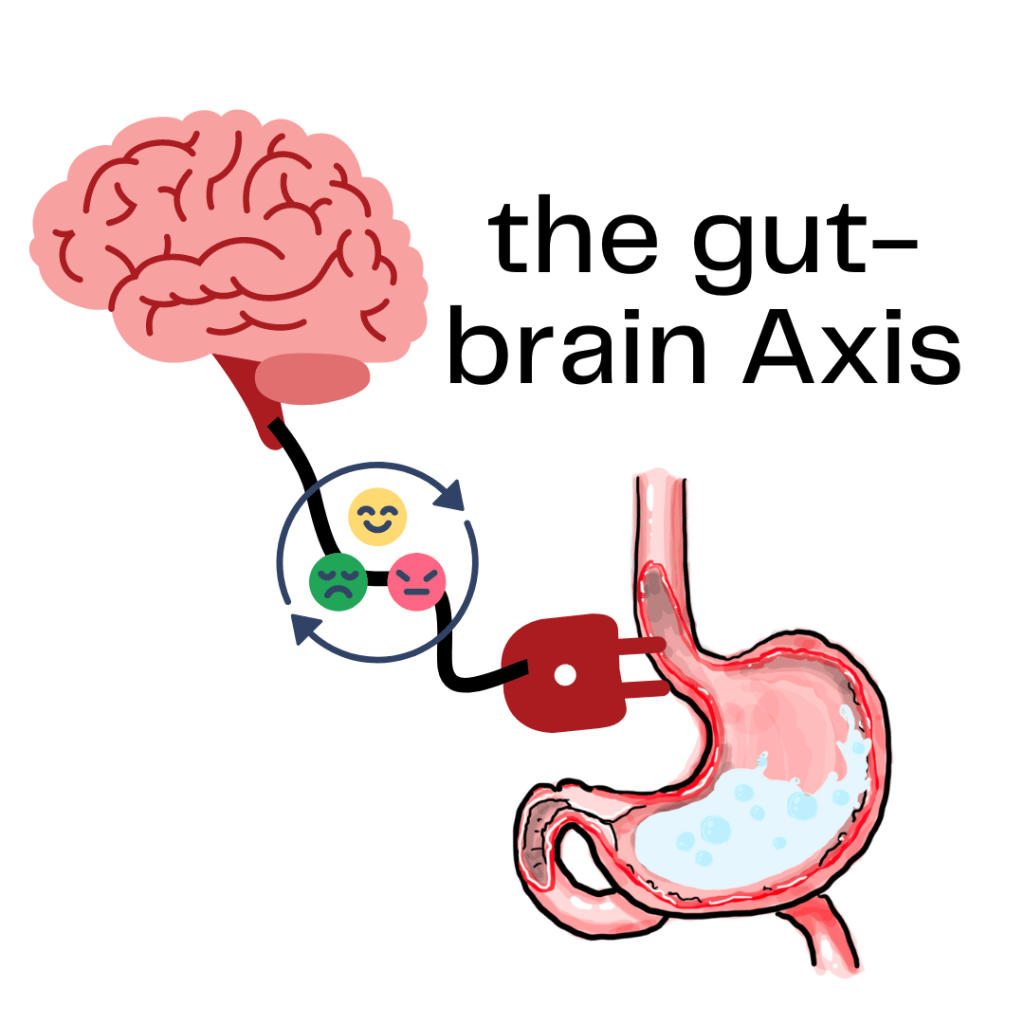
It has also been seen that certain nutrients can directly impact the vagus nerve’s activity.For instance, it has been demonstrated that omega-3 fatty acids, which are present in fatty fish like salmon and sardines, can raise vagal tone, a marker of the vagus nerve’s activity. A lack of the vitamins B6 and B12, which are present in foods like meat, fish, and eggs, on the other hand, can result in lower vagal activity and a higher risk of depression and anxiety.
Role of gender and age
The way food affects mood across genders and different ages can vary. Relatively, more studies have been done on women than on men to find a specific connection between food and mood. Women are more likely to experience mood swings due to hormonal changes throughout their lives. Foods like dark chocolate, which contains magnesium, have been shown to reduce irritability and anxiety during menstruation. Studies on men showed that men who consumed more whole grains, fruits, and vegetables had a lower risk of developing depression. On the other hand, caffeine and alcohol exacerbate mood swings in both men and women. It was quite evident that the research on gender differences in the way food affects emotions was limited.
An important and more commonly known fact is that as we age, our body’s ability to process certain foods (like alcohol, caffeine, and spicy foods) changes. Consuming diets rich in fruits and whole grains, and avoiding red meat has been shown to decrease the risk of developing cognitive decline and dementia.
How do you determine which foods affect your mood?
It can be difficult to determine which foods have positive and negative effects on mood because these effects are extremely individualized. Keeping a food journal and noting how you feel after eating particular foods is one way to figure out which foods have an impact on your mood. Take notice of any adjustments in your disposition or level of energy. A licensed dietitian or other healthcare professional can assist you in creating a personalized nutrition plan as an additional option. They can also help you identify any deficiencies or imbalances in your diet and suggest dietary changes that can positively impact your mood. By taking a personalized approach to your nutrition, you can identify which foods work best for you and optimize your mood and overall well-being.
Here’s another good read about this topic by Harvard Health: https://www.health.harvard.edu/mind-and-mood/food-and-mood-is-there-a-connection
Download the free mood journal template here:
References:
- Opie RS, O’Neil A, Jacka FN, Pizzinga J, Itsiopoulos C. A modified Mediterranean dietary intervention for adults with major depression: Dietary protocol and feasibility data from the SMILES trial. Nutr Neurosci. 2018 Jul;21(6):487-501. doi: 10.1080/1028415X.2017.1312841. Epub 2017 Apr 20. PMID: 28427227.
- Jacka FN, O’Neil A, Opie R, Itsiopoulos C, Cotton S, Mohebbi M, Castle D, Dash S, Mihalopoulos C, Chatterton
 Designed by CKB

Leave a comment