

The Iowa orphan study, also infamously known as “the monster study” was a controversial speech therapy experiment conducted in 1939, by Wendell Johnson, a speech pathologist. The experiment was aimed to study the causes and mechanisms of stuttering. Johnson himself was a stutter when he was five, which likely contributed to his interest in studying the disorder. His own experiences with stuttering influenced his approach to the “Monster Study” and his belief that psychological factors could play a role in the disorder.
The Experiment
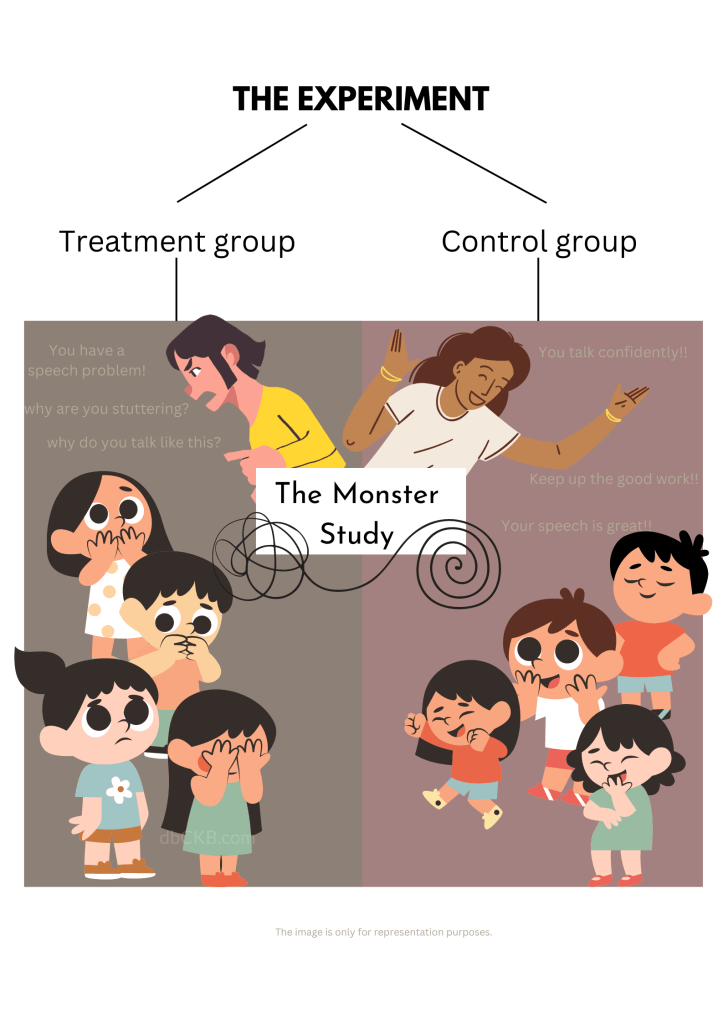
Johnson’s study involved 22 orphaned children aged 5 to 15 years, who were divided into two groups: treatment group and control group. The treatment group consisted of 11 children, who were told that they had a speech impediment, even if they didn’t have one. The control group consisted of the rest 11 children, who received positive feedback on their speech development.
The Results
The children in the treatment group were repeatedly told that they were stutters, and their speech was bad. It lead to a change in their demeanor, with signs of low self esteem and social anxiety. They started stuttering even if they didn’t stutter in the first place. One of the kids, an 11 year old girl was severely affected by the negative feedback, and she reportedly stopped talking altogether for several months.
The children in the control group, received positive feedback and encouragement (regardless of whether they stuttered or not), had better outcomes. They spoke fluently, and did not develop self esteem issues. While the children in the control group had better outcomes, it is worth noting that the sample size of the study was small and the results are not necessarily generalizable to other populations or context.
Ethical Implications
The idea that emotional conflicts and unconscious desires could manifest physical symptoms was quiet popular in the field of psychoanalysis in the early 20th century. Wendell and colleagues may not have considered the potential harm that the experiment could cause to the children involved. The prevailing attitude in the scientific community back then seemed to follow the belief that ends justify the means.
They subjected vulnerable children to harm and trauma in the name of research. The fact that they selected children living in an orphanage could be seen as a convenient factor in their selection. The experiment violated basic principles of human dignity and respect. Regardless of their living situation or family circumstances, they were still vulnerable children who deserved to be treated with respect and dignity. There was no informed consent where the participants are required to understand the nature and potential risks of the study before agreeing to participate.
Vulnerable populations, such as children or people living in poverty, are often at greater risk of being subjected to unethical or exploitative research practices. This is why ethical guidelines and principles for research with human participants place a special emphasis on protecting vulnerable populations and ensuring that they are not subjected to harm or exploitation.
In recent years, there has been a growing emphasis on using non-invasive, ethical methods to study speech disorders, including stuttering. One approach that has shown promise is neuroimaging studies that use functional magnetic resonance imaging (fMRI) or other imaging techniques to examine the brain activity associated with stuttering. These studies can provide valuable insights into the neural mechanisms underlying stuttering and may ultimately lead to more effective treatments for the disorder.
For my fellow scientists
I have summarized some of the experimental flaws that I think were notable:
- Small sample size: Only 22 children participated in the experiment.
- No Random assignment: The children were not randomly assigned in the group, which makes it difficult to draw causal conclusions about the impact of experimental interventions.
- Lack of Baseline measurements: The researchers did not measure the severity of stuttering in children. It makes it difficult to determine whether the stutter was simply due to chance or the experiment.
- Experimenter Bias: The researchers may have consciously influenced the outcomes of the study, because they were not blind to the experimental condition
- Major ethical issues: The study violated many of the basic principles of ethical research, including informed consent, beneficence, non-maleficence, and respect for persons.
Side note : The “Monster Study” is so named because of the extreme and unethical nature of the experiment, as well as the emotional harm it caused to the children who participated.
 Designed by CKB
Leave a comment