

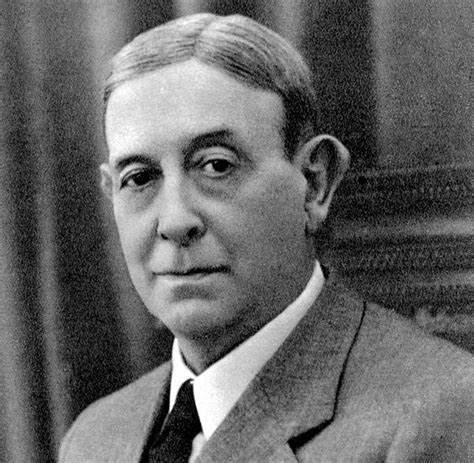
In 1949, a Portuguese neurologist and a psychiatrist; Antonio Moniz, received a Nobel Prize for the development of the procedure called lobotomy. By 1952, around 50,000 patients in the United States and Canada had reportedly undergone this treatment, with Moniz claiming it could cure depression and schizophrenia. The fact that such a cruel and inhumane technique was passed off as a supposed cure for mental illness is deeply unsettling and leaves me incredulous.
The familiarity of many of us with the term “lobotomy” arises from the several movies and documentaries that have been featured around this topic. Lobotomy was aimed at treating mental illnesses by severing the connection between the prefrontal cortex and the rest of the brain. The prefrontal cortex (PFC) regulates our thoughts, actions, and emotions.
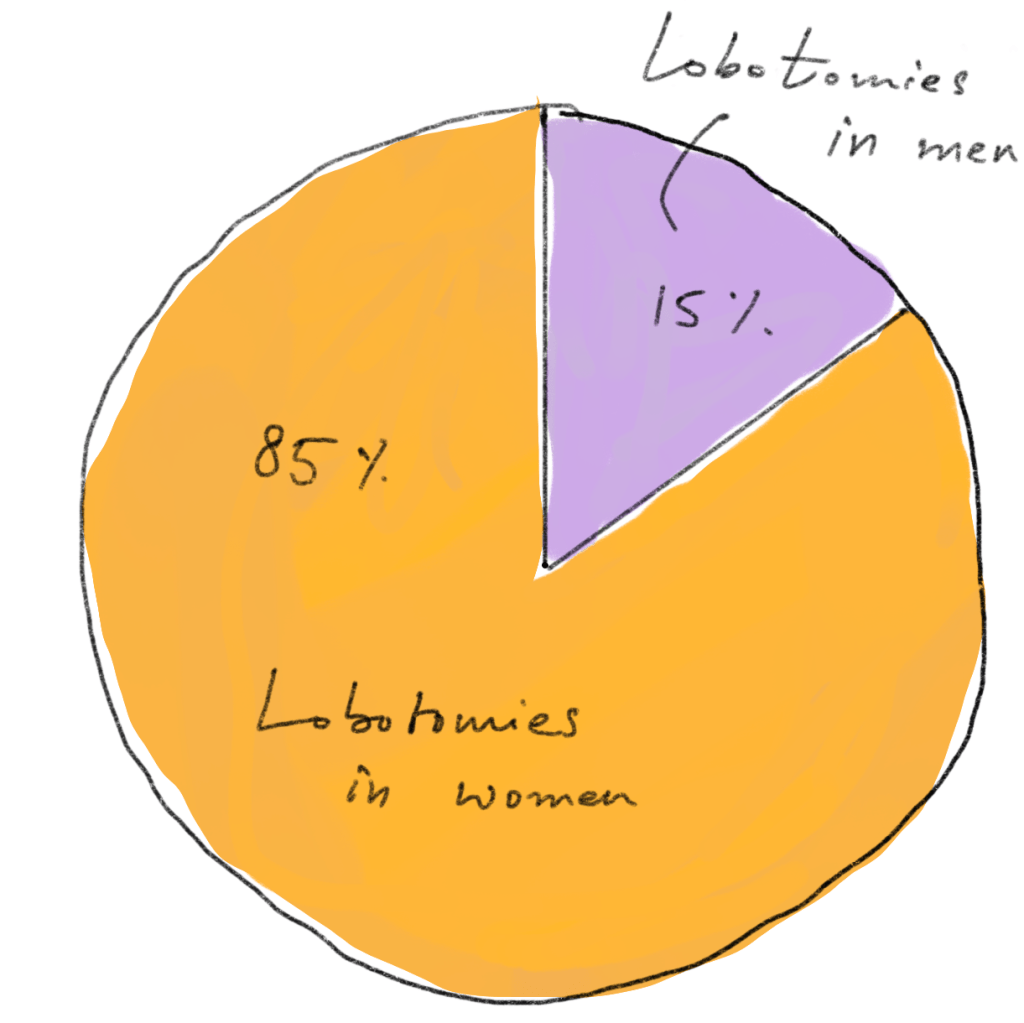
During that time, mental illnesses were poorly understood, and strong societal norms pressured individuals, particularly women, to conform to these norms. Women who deviated from these norms in any way, whether through exhibiting strong views, emotions, or sexuality, were stigmatized as “hysterical”, or “mentally ill.”. The word hysteria was used as a catch-all term for women not conforming to gender norms and was frequently used to justify medical interventions like putting them in a mental asylum or performing lobotomies. Men lobotomized too, because they were not immune to the societal pressures at that time, but the historical records on lobotomy suggest that women were more frequently targeted than men. Of all those lobotomized, 85% were women, and merely 15% were men1.
The case of Rosemary Kennedy
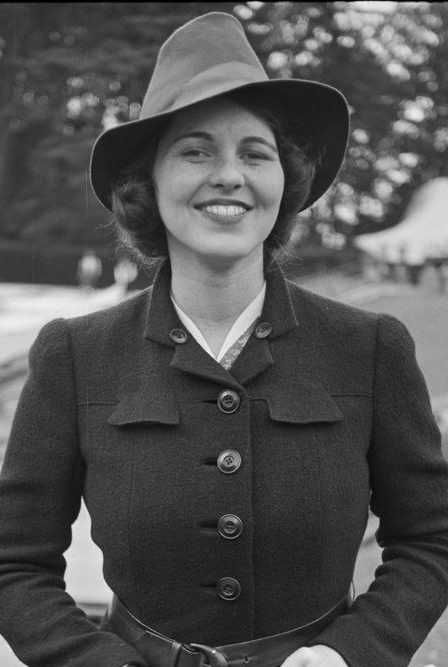
The most famous case that sheds light on the ill effects of lobotomy was that of Rosemary Kennedy, the sister of the former U.S. president John F. Kennedy. Her parents; Joseph and Rose Kennedy were concerned about her erratic behavior during her teens and early twenties. They cited that she became rebellious and engaged in behaviors that her family deemed inappropriate; like sneaking out at night or getting involved with men. They feared about her future prospects and her ability to conform to the then societal expectations.
Joseph Kennedy made the decision to allow lobotomy to be performed on his daughter (then 23), to make her more manageable. The lobotomy, performed by Dr. James Watts, went horribly wrong, leaving Rosemary permanently disabled. This incident was a turning point in the public perception of the procedure. It helped contribute to its eventual decline as a psychiatric treatment.
Rosemary Kennedy
The ease with which Rosemary Kennedy was lobotomized at the young age of 23, in an attempt to “manage” her behavior, sends shivers down my spine. How did it come to this? Why was lobotomy such a popular and easy solution? What societal pressures existed for women to conform to such an extent that her own father felt compelled to take this step? These are the questions that plague me when I think about Rosemary’s tragic story.
There is no single answer to these questions, but I presume that the influence of charismatic doctors promoting the procedure was a major factor. The second reason could be that the Kennedy’s were an influential family, with access and resources to medical professionals who can perform the procedure despite the risks involved. He saw that his daughter would not live up to his expectation, so he decided to mute her by letting the doctor ice pick her brain.
Why so many women were lobotomized?
The combination of societal pressures and the eagerness of doctors to try out new treatments contributed to the widespread use of lobotomy on women, particularly those who were seen as difficult or disobedient. Additionally, the medical profession of the time was largely male-dominated, and the field of psychiatry was still in its early stages. Lobotomy was seen as a revolutionary and cutting-edge procedure that promised to cure mental illness, and many male doctors were eager to try it out on their patients, particularly women who were seen as more susceptible to emotional and mental disorders.
There were profound and far-reaching effects of women being lobotomized. Lobotomy affected their ability to function in society, due to emotional impairments, memory loss and personality changes. Women who underwent the procedure, were also sterilized forcefully, to prevent them from having children. This led to a culture of medical paternalism, in which doctors and caregivers believed that they knew what was best for them without consulting their female patients.
Where do we stand now ?
The fact that mental health is as critical as overall health is now being recognized, suggests we have come a long way. Compared to the past , the the availability of evidence-based treatments and therapy has given a wide range of tools for the medical health professionals to help those in need.
However, the access to mental health care and it’s affordability is still an issue. There is still a stigma around mental health in many cultures. Also, it has been found that men feel discouraged to seek help for emotional difficulties. They often avoid seeking help until there is a major crisis. The suicide rates in men are 3.5 times higher than women. We have certainly heard these phrases: “Men don’t cry”, or “Mard ko dard nahi hota (A [real] man doesn’t feel pain)”. These ideals emphasizing men being self-reliant, stoic and tough has made it worse for men to seek help. Although there is a changing trend towards mental health and treatments being offered, but there is still a persistent gender gap in how patients are treated.
Today, lobotomy is widely considered to be a barbaric and inhumane procedure. However, its legacy lives on, and the mistreatment of women in the mental health system continues to this day. Women are still more likely than men to be diagnosed with mental illnesses, and they are often subjected to discriminatory treatment and stigmatization. We should recognize the history of lobotomy as a warning of the dangers of unchecked medical power and to work towards a more equitable and compassionate mental health system for all.
1 Braslow, J. (1997). 7. Discipline Gendered: Women and the Practice of Lobotomy. In Mental Ills and Bodily Cures: Psychiatric Treatment in the First Half of the Twentieth Century (pp. 152-170). Berkeley: University of California Press. https://doi.org/10.1525/9780520917934-011
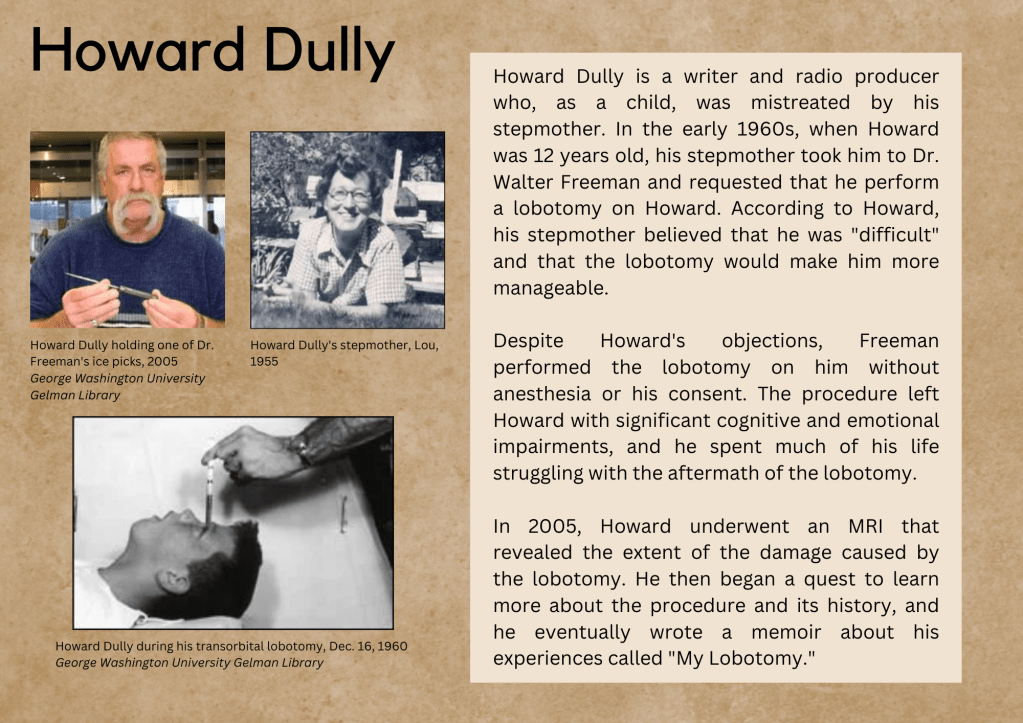
Some more stories about people that were lobotomized:

“This affirmation bore abhorrent fruit, a fruit born of a therapeutic rationale that elevated the body as the exclusive source of behavioral diseases and sole site of their cure. For these doctors, a woman’s mind, compared to a man’s, was more dependent on the body and hence more receptive to a therapeutic discipline that aimed at eradicating the source of diseased behaviors. It is an ironic culmination of our story that as these doctors deployed their most biological of therapies backed by mountains of contemporary neuropsychiatric evidence, not to mention a Nobel Prize.”
From the book “Mental Ills and Bodily Cures”, Chapter 7: Discipline Gender: Women and the Practice of Lobotomy.
 Designed by CKB
Leave a comment